


As warmer days melt away the winter chill, we instinctively start undressing; strappy tops, denim short, pretty dresses; and that’s just the boys! But how do we keep safe and why has suncream got so flipping confusing?
I wanted to break it down and keep it simple because it really is very simple, but it could also just save your life one day.
As skin cancers rise globally and the UK sees more cases than any other cancers combined, we have to ask, with everyone obsessing about plastering on the suncream; why aren’t we doing better? It’s simple. We are lulled into a false sense of security and it’s literally killing us.
Let’s get down to brass tacks:
The sun emits a multitude of rays, visible, infrared and ultraviolet. The main ones we worry about are the ultraviolet ones; UVA (the aging ray), UVB (the burning ray), UVC (the cancer ray) and more recently blue light (also omitted from devices and strip lights, etc.) However, we now know all these rays can cause skin cancers and all of them need considering when we choose our suncream.
SPF simply means ‘sun protection factor,’ and it only refers to UVB ray protection. Which are usually only an issue between 10 am and 2pm in the UK (this differs in other hotter countries). The number attached to it relates to time; so, for example, if you went into the midday sun unprotected, however many minutes it takes for you to start going pink should be multiplied by the SPF number on the product. If, for example you consider an SPF 15, you will be protected for 15 multiplied by your pinkening minutes.
UVC is thankfully absorbed by the earth’s atmosphere so not a problem for us. UVA is around us all the time in daylight hours, 365 days a year, it can penetrate glass and cloud cover and needs its own protection.
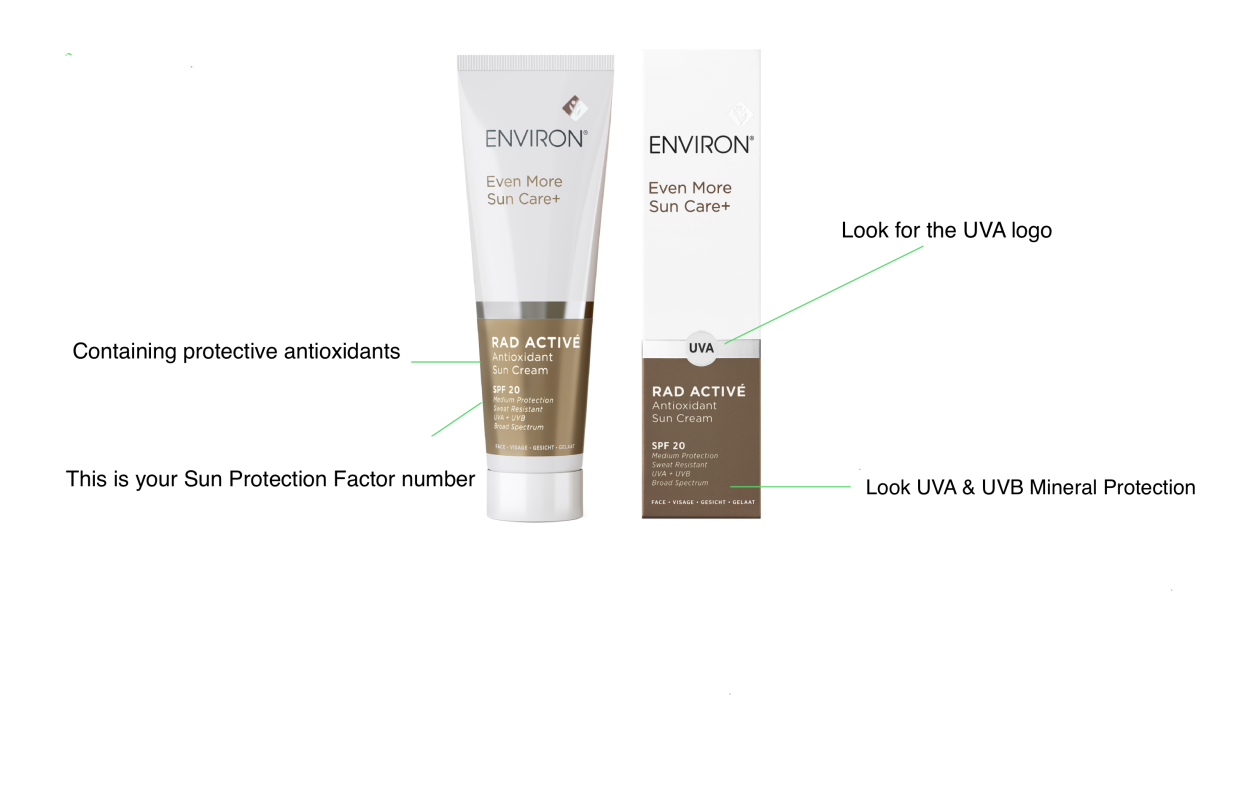
When we go above an SPF 15 we need to consider other factors for example research has now shown that the difference in protection between an SPF15 and an SPF50 against UVB rays only differs by about 4 to 5% and yet the toxic load of additional chemicals needed to be able to achieve an SPF 50 is frightening and the concern is that it’s these chemicals that are driving the surge in skin cancers. UVA protection is totally separate and should be labelled separately on the suncream packaging (see diagram and look for this logo when purchasing suncream not just the SPF number).
If we now move our attention to the different types of sun creams available on our shelves; the most common and readily available is organic suncream. Don’t be fooled by the name, as there’s nothing organic about it. It simply means it gives protection by use of chemicals alone, the word organic simply relates to the fact that the chemical molecules used contain carbon. Organic sun creams absorb UV rays, then break them down in the skin, whilst, inorganic (mineral) suncream, act like a mirror, scattering and reflecting harmful rays away, without the massive toxic load of chemicals on the skin, plus its mechanism of action means it protects against all harmful rays.
What does that mean for us, in 2019 four of the main off the shelf organic sun creams were put through clinical trials and found to leave higher than acceptable levels of toxins in the bloodstream following application. Other research carried out in 2006 showed that when UVA rays bombarded skin covered in chemical (organic) SPF of 30 or above more free radicals were found in the skin than completely unprotected skin.
We must also be mindful that sun exposure is also vital for health, with research now showing that those living in sunnier countries have a lower incidence of colon, breast, ovarian and prostate cancer. So, whilst we need to be careful, we also shouldn’t be frightened of our most natural of human power sources.
We need to consider a more comprehensive protection with free radical protection included. Vitamin A is found naturally in the skin and acts as one of our own inbuilt sun protections, UV rays deplete this natural SPF so topping this up is a great way to offer more protection to our skin without harsh chemicals. Our diet is also massively important when it comes to healthy, resilient skin, maintaining a diet rich vitamin A, zinc and antioxidants will further protect your skin from harmful extrinsic factors. Did you know for example that increasing your intake of vitamin A can significantly reduce your risk of developing squamous cell carcinoma which if left untreated can be fatal. Finally, we also need to be mindful of vitamin D in all of this. Vitamin D is crucial to health and only produced, naturally when we are in the sun. Having short periods of unprotected sun exposure is therefore not only safe, but vital to health.
Putting this altogether my advice is this:
- Use only a Mineral Suncream which also contains powerful antioxidants and Vitamin A.
- Never use anything higher than an SPF 30. Your thoroughness of application is far more important than the number.
- Always look for the UVA shield logo on the suncream.
- Reapply your suncream every 2 hours, or after a swim.
- Top up your body’s own supply of natural sun protection through diet and good, active skin products, ie, Vitamin A & C.
- Don’t think you should be coating your children in SPF 50 every few minutes, you’re most likely doing more harm than good.
- Consider short bursts of unprotected sun exposure to boost your Vitamin D
- ENJOY THE SUNSHINE!
